
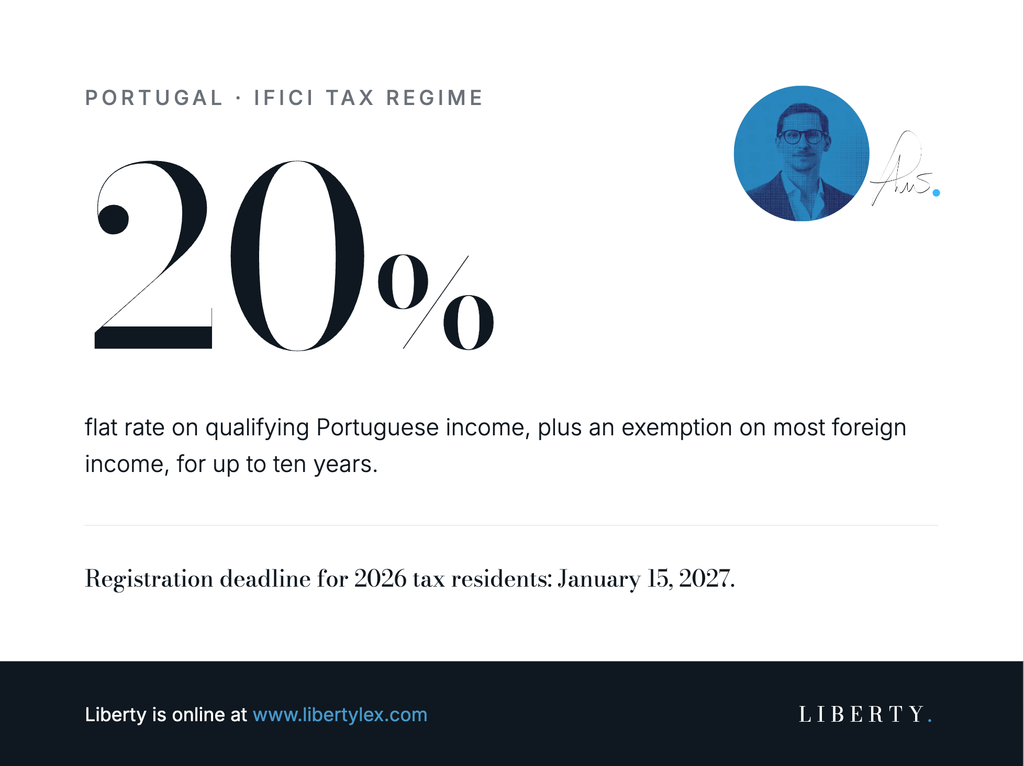
The IFICI regime in Portugal, often called NHR 2.0 as the successor to the Non-Habitual Resident regime, offers a 20% income tax rate on qualifying professional income and an exemption for most foreign income, for up to ten years. For professionals and business owners moving to Portugal, these benefits can make a substantial difference to their tax position.
Despite its name, the Tax Incentive for Scientific Research and Innovation extends beyond researchers. Certain executives, technology professionals and entrepreneurs may also qualify. The key is whether your work and the organisation through which you carry it out meet the regime’s requirements.
IFICI Portugal tax benefits: a 20% rate and a foreign income exemption
IFICI in Portugal has two main advantages:
- A 20% income tax rate on taxable Portuguese employment and self-employment income from an eligible activity, instead of the ordinary progressive rates.
- An exemption for most foreign income, including dividends, interest, rental income and capital gains. Exempt income can still affect the rate applied to other taxable income, and tax may remain payable abroad.
Pensions are outside the IFICI exemption and generally remain subject to the ordinary tax rules. Income paid by entities in jurisdictions on Portugal’s tax blacklist is also excluded from the exemption and can be taxed at 35%. Portuguese dividends and rental income do not benefit from the 20% rate.
Who qualifies for IFICI in Portugal
You must become tax resident in Portugal without having been resident here in any of the previous five years. Both Portuguese and foreign nationals can qualify. Previous beneficiaries of the Non-Habitual Resident regime cannot access IFICI, and it is incompatible with the returning-residents tax regime. IFICI can only be used once.
You must also earn income from an eligible activity. Examples include higher-education teaching and scientific research, certain roles in certified start-ups, and qualified positions in businesses meeting specific investment or export requirements, or carrying out economic activities recognised as relevant to the Portuguese economy.
Your job title alone is not enough. Depending on the route, eligibility may turn on your qualifications and experience, the company’s activity or its export turnover. Some routes require an employment contract; others allow professional services or a role as a company director.
Business owners may qualify through an eligible management role, provided both the role and the company meet the relevant conditions. Owning shares or receiving dividends alone does not provide access. Once you qualify, however, the exemption for foreign investment income can be a significant part of the benefit.
The IFICI Portugal application deadline to plan around
If you become Portuguese tax resident in 2026, the registration deadline is 15 January 2027. You submit the IFICI application through Portugal’s Portal das Finanças, with the evidence or company confirmations required for your route.
A late application can mean losing years of benefit. The regime then starts in the year of registration and runs only for the remainder of the original ten-year period. Continued eligibility also matters: review any change of role or employer and report it to the tax authority.
Common IFICI mistakes to avoid
- Leaving tax planning until after the move. Review your working arrangements, how you receive income and any existing international business structures before you become Portuguese tax resident. These elements can affect both your eligibility and the tax outcome, and may require coordination with advisers in other countries.
- Assuming your job title or academic background are enough. Eligibility depends on the work you actually do and, under many routes, the company through which you do it. A qualifying title or specific academic background does not automatically mean that you meet the relevant conditions.
- Missing the registration deadline. A late application can cost you years of benefit. Check the deadline and arrange any supporting evidence or company confirmations early.
IFICI Portugal: frequently asked questions
How do I apply for IFICI in Portugal?
You first register as a Portuguese tax resident. You then submit the IFICI application through the Portal das Finanças by 15 January of the year after you become resident, together with the evidence or company confirmations your route requires.
How long do the IFICI benefits last?
Up to ten consecutive years, counted from the year you become tax resident. The regime can only be used once and cannot be renewed.
Can retirees benefit from IFICI?
Pensions are not covered by the IFICI exemption and generally remain taxed under the ordinary rules. Retirees, and anyone whose income will include a pension, should therefore plan the tax treatment of that income in advance, ideally before becoming tax resident in Portugal.
Is IFICI only for scientific researchers?
Despite its name, certain executives, technology professionals, start-up staff and business owners in eligible management roles may also qualify, provided both the role and the company meet the regime’s conditions.
Before you move to Portugal
Assess your eligibility and the likely tax outcome together, taking account of your professional income, investments and pensions. If you are relocating through a residence-by-investment route, read our guide to the realistic Portugal Golden Visa timeline as well.
If you are considering a move to Portugal, or became tax resident here in 2026, Liberty can help assess your IFICI eligibility and prepare your registration. Contact us through libertylex.com.
By André Madeira, Counsel Of Tax at Liberty · 14 October 2026